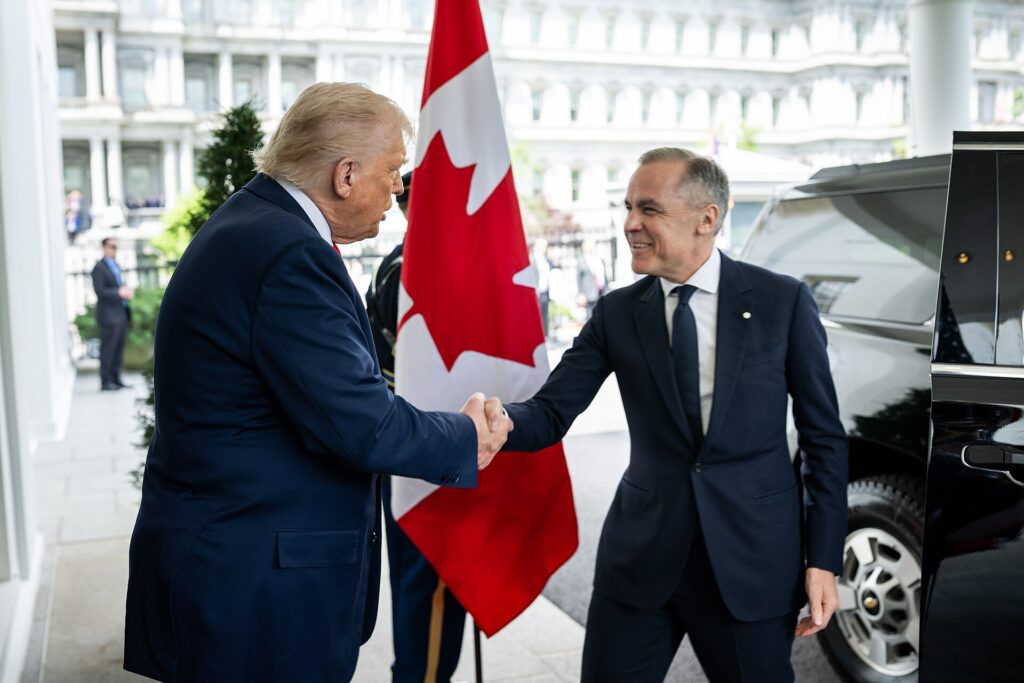
On August 18, the Trump administration announced a temporary three-day halt on the planned 50 per cent tariffs on a range of Canadian goods just hours before they were set to take effect. President Trump also said the pause reflects what both Washington and Ottawa describe as substantial progress toward a trade agreement, although key details remain unresolved.
The proposed tariffs targeted an estimated US$20 billion in Canadian exports and would affect sectors ranging from manufacturing and forestry products to value-added agriculture and consumer goods.
The pause offers a welcome reprieve for businesses across Western Canada, but it is far from a resolution. For Western Canada’s exporters, producers, and investors, the immediate takeaway is straightforward: uncertainty has once again been deferred rather than eliminated.
The positive news is that neither side appears eager to trigger another damaging round of trade disruption. Both President Trump and Prime Minister Carney have signalled that negotiators are close to a deal, with discussions reportedly focusing on market access, economic security commitments, digital trade, and longstanding disputes involving dairy, alcohol, and automotive sectors.
The difference in tone between Washington and Ottawa is significant. Trump is signalling a deal while Carney is signalling ongoing negotiations. For business, the prudent takeaway is that progress is real, but tariff relief should not yet be treated as settled.
The broader stakes clearly extend well beyond the specific products under the current trade discussions. Businesses are seeking certainty to support investment decisions, hiring plans, and supply-chain commitments. The return of tariff threats has reinforced a lesson many Canadian businesses have already learned over the past few years: dependence on a single export market carries growing strategic risk.
The next 72 hours will be critical. If negotiators can finalize an agreement, markets will likely view it as a positive signal for broader Canada-U.S. trade stability and potentially for future negotiations around the CUSMA framework. If talks break down, however, the tariffs remain available as a bargaining tool and could return with little warning.
At this point, it appears a deal is more likely than not, as the political and economic incentives on both sides favour an agreement. But until documents are signed, Canadian businesses should continue planning for volatility while positioning themselves for a more diversified future trade environment.
We’re Here to Help
For more information and insights about what these developments mean for Canada’s political landscape, please contact:
Cameron Friesen – Vice President, Manitoba
cameron@prairieskystrategy.ca
204.332.1445
Grant McLellan – Vice President, Saskatchewan
grant@prairieskystrategy.ca
306.530.0177
Mat Steppan – Vice President, Alberta
mat@prairieskystrategy.ca
780.236.1543
Richard Truscott – Vice President
richard@prairieskystrategy.ca
403.998.0494
Jeff Sterzuk – President
jeff@prairieskystrategy.ca
403.612.1724