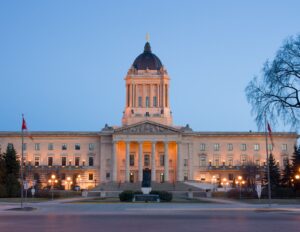
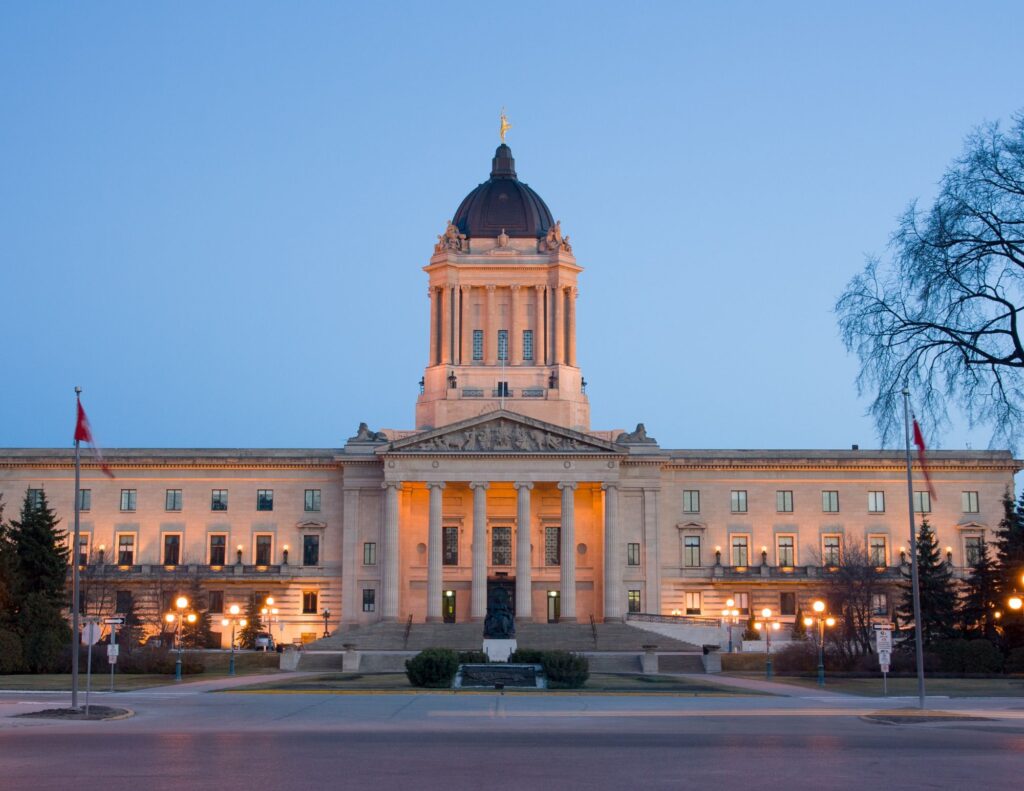
The Manitoba Legislature fall session kicked off today with the NDP government firmly in control of the political agenda. Premier Wab Kinew’s approval continues to soar, with recent polling showing historic levels of support for the government across both urban and rural Manitoba.
A Weakened Opposition
Today’s return to the Legislature was overshadowed by turmoil within the Manitoba PC caucus. Leader Obby Khan announced his resignation yesterday, following a difficult week that began with abysmal new polling, the departure of campaign manager Steven Carter – after just 18 months – and culminating in a narrowly survived confidence vote last Friday. Caucus scrambled last night to elect MLA Konrad Narth as interim party leader. Adding to the surprise was Khan’s decision not only to step down as leader, but leave the PC Caucus altogether and sit as an Independent – a highly unusual move that points to the depth of the divisions and hard feelings within the caucus.
Affordability Remains the Political Priority
For the Kinew Government, affordability remains the central focus. The NDP delivered measures last spring including gas-tax relief and PST elimination on additional grocery store items. This fall, more affordability measures are expected, including action on rent control.
Fiscal Management Under the Microscope
The government enters Session with a mixed economic and fiscal outlook.
While the 2025/26 Public Accounts demonstrate progress toward deficit reduction, the NDP’s commitment to eliminate the $832M deficit during its first term appears increasingly out of reach with just one year remaining in the mandate. Manitoba’s GDP growth was anemic at just 1.3% (compared to 1.7% Canadian average), reinforcing concerns about the broader economic challenges and the impact of U.S. tariffs.
The NDP Government continues to position itself as a responsible fiscal manager with measures like a new contribution to the Rainy Day Fund. With an election approaching, however, a key question will be whether the government continues on its path toward balance or uses its political advantage for additional spending and affordability measures.
Cabinet Largely Settled
The front bench appears to be remaining in place. Since 2023, the NDP has avoided a significant Cabinet shuffle, expanding Cabinet incrementally along the way, including two new junior ministers added yesterday, in part to address restlessness among government backbenchers.
While the government’s strong political standing fuels new speculation about an early election, such a move appears unlikely, with a municipal election underway, the Opposition in disarray and the risk that Manitobans would view an early election call negatively.
Churchill and Northern Development
Churchill remains a key component of the government’s economic and political agenda. Its importance was underscored by a new PST exemption on major capital investments related to expanding the port, highlighted at the recent Canada Investment Summit.
Crown-Indigenous corporation on the horizon
The Premier has indicated legislation is coming this fall to establish the long-promised Crown-Indigenous Corporation, intended to facilitate First Nations consent and equity participation in major development projects.
Grand Chiefs have begun to express concerns on both the policy and the process. Métis participation will be another important one to watch with clarifications needed on how the Manitoba Métis would participate in the new framework.
If done right, the corporation would be a core component of Manitoba’s approach to major-project development, Indigenous economic participation, and investment attraction. Without buy-in by First Nations and Métis leaders, the gears on the Premier’s project will continue to grind.
Hydro Remains a Pressure Point
Manitoba Hydro is likely to attract significant attention during fall Session for all the wrong reasons. Questions persist around Hydro’s plans for additional natural gas generation, electricity affordability, system reliability, Indigenous participation and the ability to meet growing future electricity demand.
The utility has faced a contentious summer of regulatory hearings examining its 10-year plan and future generation requirements. That scrutiny has been compounded by the sudden departure of CEO Allan Danroth for personal reasons and the commencement of yet another CEO search.
Permanent Time Proposal Gains Traction
The government has also moved the time-zone issue onto the political agenda following public input through its online consultation portal. Initial reaction appears positive, reinforcing the NDP’s ability to put issues in front of Manitobans, demonstrate that it is listening and connect with voters on everyday concerns.
Key Take-Away
The NDP begins the fall session in an enviable political position. Despite persisting challenges on healthcare wait times, public disorder, and its addictions response, Premier Kinew remains popular, the opposition is consumed by internal turmoil, and there is little immediate risk to the government’s hold on power.
The challenge for the NDP is less about politics and more about governing: balancing affordability measures, fiscal discipline, economic growth, and major project development as it positions itself for the next provincial election.
We’re Here to Help
For more information and insights about what these developments mean for Manitoba’s political landscape, please contact:
Cameron Friesen – Vice President, Manitoba
cameron@prairieskystrategy.ca
204.332.1445
Connie Tamoto – Senior Strategy Advisor
connie@prairieskystrategy.ca
204.918.0344
To learn more about Prairie Sky Strategy, please visit our website.