September 14th, 2026
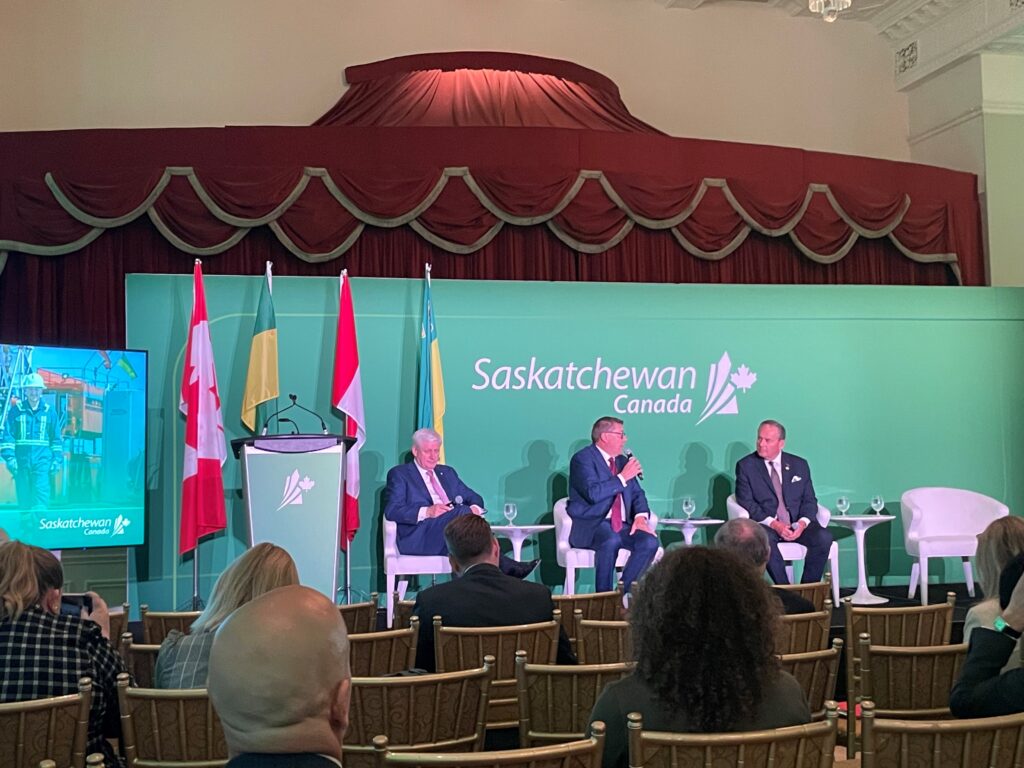
Today’s announcement of Bell Canada’s expanded $52 billion AI data centre project in Saskatchewan is being positioned by the Saskatchewan Government as not only the largest private-sector capital investment in Canadian history but, according to Premier Moe, also represents a significant shift in how Saskatchewan is viewed within the national economy. Rather than being known primarily for agriculture, mining, and energy, the province is increasingly positioning itself as a destination for large-scale technology and digital infrastructure investment.
More Than a Data Centre
A key feature of the project is the establishment of the headquarters for Bell AI Fabric in the Regina region. Beyond the eye-popping investment number, the project is also expected to create hundreds of permanent jobs, thousands of additional indirect jobs, and become a new technology anchor for the province. The government has framed the investment as an opportunity to attract future AI, cloud computing, and digital infrastructure projects while strengthening Saskatchewan’s long-term economic growth strategy.
The announcement is also closely tied to Canada’s growing focus on data sovereignty. Governments and businesses are increasingly concerned about where data is stored, who controls it, and which laws apply to it. By housing AI infrastructure in Canada through a Canadian-owned company, Saskatchewan and Bell say they are promoting a model where the data remains under Canadian governance and regulatory oversight.
Where Technology Meets Energy Policy
Equally important is the project’s impact on Saskatchewan’s energy and infrastructure agenda. Data centres require enormous amounts of power, and Bell’s proposal includes both electricity supplied from the provincial grid (300 MW) and additional generation (900 MW) under the umbrella of Saskatchewan’s new “Bring Your Own Power” framework released in August. This reinforces the growing connection between technology policy and energy policy and could accelerate investment in power generation and transmission infrastructure.
The project also serves as an early test of Saskatchewan’s new Data Centre Framework, which was just recently announced as a way to attract major investments while emphasizing Canadian ownership, local jobs, and energy self-sufficiency. If successful, the Bell project could become a model for future AI and data-centre developments across Canada.
SaskTel Partnership
Today’s announcement referenced cooperation between Bell and Sasktel that would see Bell set aside 10 MW of wholesale capacity to SaskTel for Saskatchewan data sovereignty purposes and SaskTel will also act as an agent to resell Bell products and services to SaskTel customers. Bell will also partner with SaskTel on opportunities involving Saskatchewan start-ups, post-secondary institutions, municipalities, citizen services and the public sector.
The Road Ahead
What happens next will be crucial, including municipal approvals, environmental reviews, detailed infrastructure planning, power-generation decisions and, of course, public support. However, the broader significance is already clear: Saskatchewan is making a deliberate play to become a national hub for AI infrastructure, digital investment, and secure data storage for Canadians, with Bell’s major new investment serving as the catalyst for that ambition.
We’re Here to Help
For more information and insights about what these developments mean for the political landscape in Saskatchewan, please reach out to our experts:
Darin Banadyga – Senior Strategy Advisor
darin@prairieskystrategy.ca
306.213.8211
Theo Bryson – Senior Strategy Advisor
theo@prairieskystrategy.ca
306.537.4465
Kevin Doherty – Senior Strategy Advisor
kevin@prairieskystrategy.ca
306.570.7123
Grant McLellan – Vice President
grant@prairieskystrategy.ca
306.530.0177
Jeff Sterzuk – President & CEO
jeff@prairieskystrategy.ca
403.612.1724
To learn more about Prairie Sky Strategy, please visit our website.