Two major energy and economic announcements yesterday (July 2) highlighted the delicate balancing act facing Western Canada: promoting resource development and trade while managing environmental concerns and provincial interests. Together, the new Canada-British Columbia Cooperative Prosperity Agreement and Alberta’s proposal for a new export pipeline illustrate how the federal and provincial governments are trying to build consensus around economic growth in an increasingly complex political landscape.
The agreement between Prime Minister Carney and B.C. Premier Eby represents a significant federal commitment to British Columbia. The multibillion-dollar framework includes support for infrastructure and resource projects, such as upgrades to the Massey Tunnel ($3 billion), the Port of Vancouver ($10 billion), as well as mining initiatives and forestry development. The two governments also committed to supporting the province’s LNG projects (LNG Canada Phase 2, Ksi Lisims LNG, Cedar LNG, and Woodfibre LNG) and a federal funding commitment for the North Coast Transmission Line.
Overall, the deal was framed by the two leaders as a long-term strategy to strengthen economic competitiveness and create jobs while positioning B.C. as a gateway for trade with Asia.
The Tanker Ban Remains
Politically, the most important element may be what the agreement says about oil transportation. Carney reaffirmed that the federal government will maintain the tanker ban on B.C.’s North Coast, effectively removing the possibility of a northern pipeline export route in the foreseeable future. This was a major win for the Eby government and for communities that have opposed increased tanker traffic in northern coastal waters because of spill risks and environmental concerns.
At the same time, the agreement leaves room for discussions about a pipeline reaching the province through other corridors. Rather than rejecting future energy projects outright, B.C. appears to be seeking stronger environmental protections, First Nations involvement, and economic benefits in exchange for cooperation. The deal demonstrates a pragmatic approach: protect sensitive northern coastal areas while remaining open to projects that could generate revenue and investment for the province and the country.
Alberta’s Pipeline Proposal
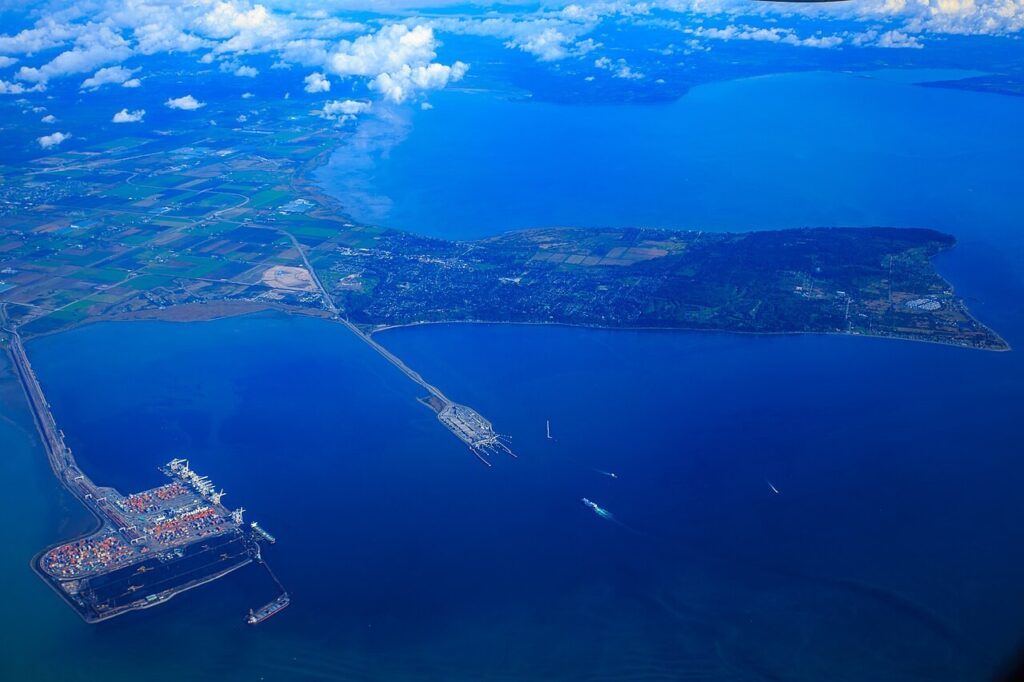
Only hours later, Prime Minister Carney joined Alberta Premier Smith as she unveiled details of a proposed new oil pipeline to British Columbia’s southwest coast. The project, developed with the federally-owned Trans Mountain Corporation and Calgary-based Pembina Pipeline, would run roughly 1,200 kilometres from the Edmonton region to the Roberts Bank area near Delta, B.C. The estimated cost ranges from $35 billion to $44 billion, with completion targeted between 2032 and 2034.
The proposal signals Alberta’s determination to expand access to Asian markets and reduce dependence on U.S. customers. By largely following an existing transportation corridor near the current Trans Mountain route, proponents hope to ease regulatory challenges and limit environmental disturbance. Prime Minister Carney indicated support for a southern corridor approach, describing that part of the B.C. Coast as a critical gateway to rapidly growing export markets.
A Delicate Balancing Act
Taken together, the announcements affirm a new phase in federal-provincial relations. Ottawa appears to be pursuing a middle path: supporting resource development and export infrastructure while maintaining environmental commitments that are politically important in British Columbia. Whether this balanced approach can satisfy Alberta’s economic ambitions, B.C.’s environmental priorities, and Indigenous consultation requirements will determine whether the proposed pipeline ultimately becomes reality.
Looking Ahead
For businesses, investors and policymakers, the significance of these announcements extends beyond the projects themselves. They signal an effort by governments to align economic growth, trade diversification and infrastructure development while reducing interprovincial tensions that have often characterized Canada’s energy debates. The coming months will reveal whether this new cooperative approach can translate into tangible results and secure broader public support across Canada.
For more information contact a Prairie Sky Strategy Senior Advisor at info@prairieskystrategy.ca.
We’re Here to Help
For more information and insights about what these developments mean for Canada and British Columbia’s political landscape, please contact:
Jeff Sterzuk – President
jeff@prairieskystrategy.ca
403.612.1724
Richard Truscott – Vice President
richard@prairieskystrategy.ca
403.998.0494
Ken Veldman – Senior Strategy Advisor, BC
ken@prairieskystrategy.ca
250.600.0670
Cam Ehl – Senior Strategy Advisor, BC
cam.ehl@prairieskystrategy.ca
250.213.1554