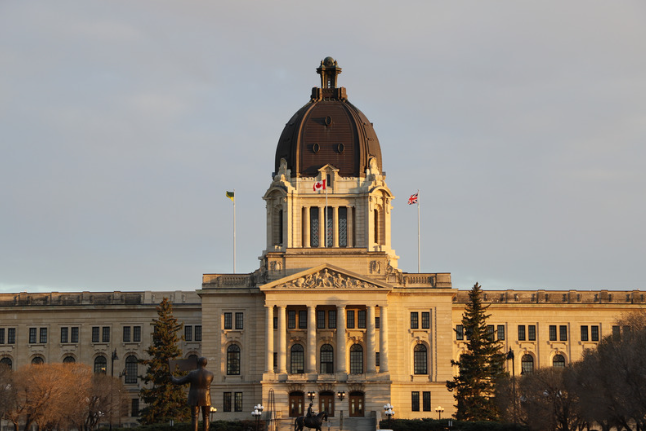
Saskatchewan Minister of Finance, the Honourable Jim Reiter, released the 2026-27 Saskatchewan Budget at the provincial legislature in Regina today. The Government framed the budget as “Protecting Saskatchewan” by prioritizing affordability, continuing to reduce taxes, while taking steps to enhance health care access, public safety, and infrastructure investment.
The Budget contained no new broad-based tax increases or service cuts. Instead, the government continues its tax reduction plan under the previously passed Saskatchewan Affordability Act. Notably, resource revenues are expected to soften, with non renewable resource revenue projected at $2.57 billion, down $132 million from the previous budget.
In terms of the bottom-line, the Government is projecting an $819 million deficit for the coming 2026-27 fiscal year that starts April 1, based on revenues of $21.4 billion and expenditures of $22.2 billion. The province plans to return to surplus by 2030-31, projecting a $124 million surplus that year through gradual reductions in spending growth along with public sector workforce attrition.
Other Key Highlights:
- Affordability: Measures totalling more than $2.5 billion were announced, including increases to personal, spousal, child and seniors’ tax exemptions, and a 5% boost to the Low Income Tax Credit.
- Personal Income Tax: As a result of indexation, a family of four will now pay no provincial income tax on their first $65,000 of income, the highest threshold in Canada. This, along with the increase in exemptions and the Low-Income Tax credit, provide approximately $200 million in annual savings for taxpayers.
- Small Business: The small business tax rate will be maintained at 1%, continuing that tax advantage relative to other provinces.
- Healthcare: Health spending is projected to reach $8.42 billion (up 5.2%), largely through major new investments to support the Patients First Health Care Plan, including expanding nurse practitioners and improving access to care.
- Infrastructure: $4.3 billion in infrastructure spending is expected, including for hospitals, long term care, and major capital projects, making it one of the largest capital budgets in the province’s history.
- Economic development: Funding rises 56% to $549 million, however, funding for Environment and Natural Resources falls 44.8% to $248 million.
- Public Sector Workers: A reduction of approximately 300 positions per year across executive government and Crown corporations will occur through attrition, not layoffs.
Overall, this budget signals a government working to shield residents from global economic turbulence by prioritizing affordability, health care, and capital investment while accepting several years of deficits as the cost of making it happen.
Over the coming budget year, the government can be expected to focus on delivering major health and capital commitments, and monitoring volatile resource markets, all while maintaining Saskatchewan’s position as one of the most affordable provinces in the country.
We’re Here to Help
For more information and insights about what these developments mean for Canada’s political landscape, please contact:
For more information and insights about what these developments mean for Alberta’s political landscape, please contact:
Darin Banadyga – Senior Strategy Advisor
darin@prairieskystrategy.ca
306.213.8211
Theo Bryson – Senior Strategy Advisor
theo@prairieskystrategy.ca
306.537.4465
Kevin Doherty – Senior Strategy Advisor
kevin@prairieskystrategy.ca
306.570.7123
Grant McLellan – Senior Strategy Advisor
grant@prairieskystrategy.ca
306.530.0177
To learn more about Prairie Sky Strategy, please visit our website.