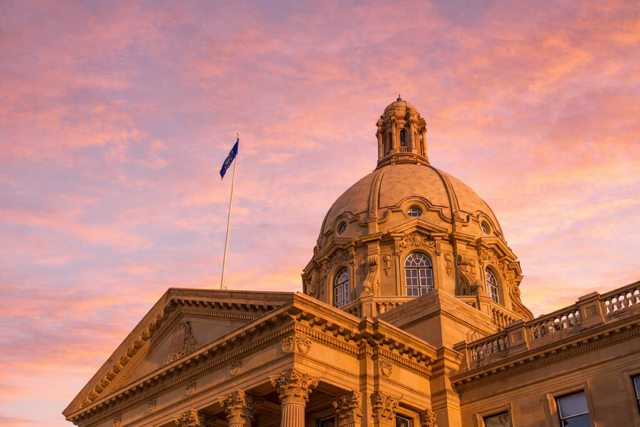
The spring 2026 session of the Alberta Legislature ended in unusual fashion, wrapping-up with Question Period and Royal Assent after all bills cleared third reading in a compressed final push. That unusual finish mirrored a session defined as much by political context as by legislative output.
While the UCP government passed a substantial slate of legislation, the political aftershocks of 2025, ranging from sovereignty debates to use of the notwithstanding clause, continued to dominate the atmosphere into 2026, often overshadowing the details of the seventeen bills that ultimately shaped policy.
Driving Growth: Trade, Investment, and Economic Expansion
In terms of the government’s economic agenda, the key legislation such as the Interprovincial Trade Mutual Recognition Act aimed to position Alberta as a leader in breaking down internal trade barriers, making it easier for businesses to operate across provincial lines and reducing regulatory duplication.
Complementing that effort, the Expedited 120-Day Approvals Act sought to address one of industry’s most persistent concerns (i.e. predictability in major project approvals) by imposing firm timelines after consultations and environmental reviews are complete. Together, these measures reinforce a pro-investment posture focused on certainty, speed, and competitiveness.
Other economic initiatives were more targeted but symbolically important, including the Immigration Oversight Act which addresses labour market pressures by tightening oversight of recruitment practices and protecting incoming workers.
Social Policy Remains in Focus
On the social policy front, the session was marked by more contentious legislation. The Safeguards for Last Resort Termination of Life Act introduced some of the most restrictive provincial rules on medical assistance in dying (MAID) in Canada, limiting eligibility and adding procedural guardrails.
At the same time, the Municipal Affairs and Housing Statutes Amendment Act touched on issues ranging from governance to public space standards, reflecting growing provincial involvement in local matters. These social bills often attracted more debate than many economic measures, reinforcing the broader political divide between government priorities and the opposition NDP’s critiques.
Reforming Public Safety and Health Care
The third pillar of the session was public safety and system reform. The Public Safety and Emergency Services Statutes Amendment Act represents a significant structural shift, advancing the Alberta Sheriffs Police Service as an alternative policing model that could eventually supplement or compete with the RCMP in some communities. Alongside this, health legislation continued the restructuring of Alberta’s health system and sought to expand access to care.
Taken together, these initiatives reflect a government attempting to balance economic growth with institutional reform, while advancing a strong law-and-order agenda.
Politics in the Background: Noise vs. Policy
Despite the political noise surrounding referendums, separation debates, and procedural fights in the legislature, the session delivered substantive policy change across multiple fronts. The Alberta Government continues to try and position the province as an economic engine within Canada, with strong private-sector growth, rising wages, and continued in-migration reinforcing that narrative.
Bottom Line: A Session of Substance Beneath the Noise
While the politics of the moment often overshadowed proceedings, the legislation passed this spring is likely to have lasting effects, particularly in shaping Alberta’s investment climate, redefining aspects of social policy, and restructuring public safety and health systems for the years ahead.
We’re Here to Help
For more information and insights about what these developments mean for Canada’s political landscape, please contact:
For more information and insights about what these developments mean for Alberta’s political landscape, please contact:
Rick Fraser -Senior Strategy Advisor
rick@prairieskystrategy.ca
403.701.7584
Whitney Issik – Senior Strategy Advisor
whitney@prairieskystrategy.ca
403.815.2582
Leigha Parsons – Senior Strategy Advisor
leigha@prairieskystrategy.ca
403.650.8191
Line Porfon – Senior Strategy Advisor
line@prairieskystrategy.ca
780.235.6267
Mat Steppan – Vice-President
mat@prairieskystrategy.ca
780.236.1543
Jeff Sterzuk – President
jeff@prairieskystrategy.ca
403.612.1724
Ben Thibault – Senior Strategy Advisor
ben@prairieskystrategy.ca
587.897.6261
Richard Truscott – Vice-President
richard@prairieskystrategy.ca
403.998.0494
To learn more about Prairie Sky Strategy, please visit our website.