March 24, 2026
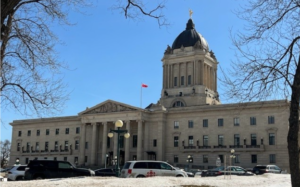
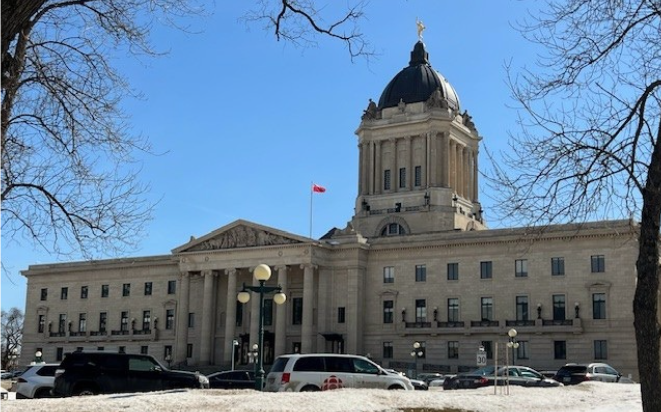
Today, the NDP Government delivered its third budget in the Manitoba Legislature. The NDP came to power in 2023 on promises to focus on healthcare investments and build the Manitoba economy. The past 2 ½ years have seen the government pivoting to respond to U.S. tariff impacts, increasing geopolitical uncertainty and record forest fires resulting in the province’s largest ever evacuation effort. At the same time, the Premier cast a bold vision for an expanded maritime port in Churchill, proposed new power generation assets, and committed broadly to reduce internal trade barriers, all while committing to eliminate the deficit in the first term.
The speech began appropriately with a tribute to and moment of silence in memory of Amanda Lathlin, MLA for The Pas-Kameesak, who passed away just days ago.
Finance Minister Adrian Sala’s budget speech, entitled “Good Jobs. Lower costs. Better Healthcare.”, reinforced the government’s efforts to improve healthcare and make life more affordable for Manitobans.
On jobs, the government trumpeted its Manitoba Jobs Agreement and new legislation requiring general contractors and subtrades to employ minimum numbers of diversity hires and facilitate easier unionization by workers. Other measures included increased funding for trades training.
On healthcare, the speech cited new healthcare projects including personal care homes in the queue, a Winnipeg ER under construction, and unique spaces to be created within hospitals to reduce pressure on emergency rooms.
Particular focus was paid to affordability, with a number of targeted assistance policies for Manitobans struggling with rising costs. These include removing the PST on additional grocery items, increasing the Homeowners Affordability Tax Credit, free transit fare for youth and children, and making the PST holiday on fuel permanent.
All in, this budget sees an increase in spending of $1.4B and a deficit projection of $498M deficit, roughly $1.2B less than 2025-26. For a government ostensibly going hard on deficit reduction, the budget reveals a 5.4% spending increase over previous year, while painting a rosy picture on GDP growth at 1.7% and revenues projected to rise by 7%.
What makes the big difference in this financial plan is a surge in federal transfer payments, up 70% from just five years ago, and now accounting for $5B of the government’s plan.
Missing from the speech is any reference to the ongoing impact of U.S. tariffs on Manitoba businesses and manufacturers, or the price of fuel which has shot up almost 50% in just four weeks following military actions in Iran and the Middle East.
No mention either of Manitoba Hydro’s current state-of-affairs and a $700M swing to the negative in its financial position after a record drought year. When questioned by the media, the Minister of Finance was bullish on Manitoba Hydro’s performance for the upcoming year, characterizing Hydro’s water troubles as isolated and in the past. Also conspicuously absent was the NDP’s heralded supervised drug consumption site, promised for January 2026, then delayed, and suddenly paused days ago following publication of a new report punching holes in the accepted view that such sites alleviate ER pressures and point individuals to recovery.
An Angus Reid poll last week showed Manitoba’s Wab Kinew still in the lead on Premier popularity, with a 61% approval rating. Those ratings, combined with an Opposition party continuing to rebuild, have fueled speculation that the Premier could seize the moment and call an early election to secure a second mandate, although the Premier has been publicly dismissing that talk. The loss of MLA Lathlin means that a by-election will be necessary to fill the empty seat in the Assembly. A win by the NDP there will continue to give them momentum.
It’s a budget that carefully picks its places for investment, cautiously chooses its messaging to show progress, and deliberately distributes affordability measures and investments where they will get noticed. The NDP have historically owned the issue of healthcare stewardship, but continued wait time challenges and grey-listing of hospital sites by nurses start to show that patience is growing thin.
Whether the government can maintain credibility on deficit elimination promises remains to be seen but the NDP is aided impressively by record-level federal government transfer payments. Given the current popularity of this government, progress on the deficit may not matter as much as opponents might believe.
Taken together, it is less a fiscal plan than a careful constructed narrative about stability, progress, and managed ambition. The government continues to tell its story of forward momentum, grounded in healthcare investments and affordability measures, while deferring some difficult files. The credibility of the story will hinge not only on delivery, but on whether external pressures, from energy volatility to federal dependency, begin to challenge underlying assumptions.
For now, the government retains political capital and message discipline, a combination that gives it latitude. The key question for stakeholders is not simply what is in this budget, but how long this narrative can be sustained, and how effectively the government will adapt when conditions inevitably shift.
We’re Here to Help
For more information and insights about what these developments mean for Manitoba’s political landscape, please contact:
Cameron Friesen – Senior Strategy Advisor
cameron@prairieskystrategy.ca
204.332.1445
Connie Tamoto – Senior Strategy Advisor
connie@prairieskystrategy.ca
204.918.0344
To learn more about Prairie Sky Strategy, please visit our website.