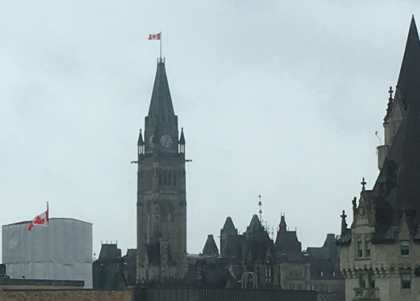
Canada’s federal Parliament reconvened today following its usual winter break, with MPs returning to Ottawa at a time of profound geopolitical tension, economic stress, and political volatility.
Concerns about affordability, Canada’s sovereignty, ongoing uncertainty in Canada/U.S. relations, and the residual aftershocks of Prime Minister Carney’s speech at the World Economic Forum (WEF), form the backdrop to a federal legislative session that is being widely viewed as highly consequential.
Prime Minister’s Speech Reshapes the Political Context
Prime Minister Carney’s address to the WEF last week has sent ripples across western countries and will set the tone for this new parliamentary session.
In Davos, Carney declared the rules‑based international order is over, warning the world is experiencing “a rupture, not a transition.” He argued that great powers, particularly the United States, are increasingly using “economic integration as coercion”, pointing to tariffs, weaponized supply chains, and overt political pressure from Canada’s ally to the south. Carney also called on so-called “middle powers” like Canada to come together and think strategically, rather than accept the old and predictable illusion of multilateralism.
The speech, while met with a rare standing ovation in Davos, has triggered a backlash from U.S. President Trump, who warned: “Canada lives because of the United States.” This tension increases pressure on the Carney government in advance of the review of the Canada–U.S.–Mexico trade agreement (CUSMA) set to be completed by July 1, 2026.
Affordability, Housing, Jobs, and a Fragile Minority Parliament
Parliament will also, no doubt, be preoccupied with the mounting affordability concerns among Canadians regarding rising high food prices, higher housing costs, and job security. Conservatives are pressing for concrete action through measures like capital gains tax credits and strategies to combat inflated food prices. Meanwhile, interim NDP leader Don Davies has signaled his party will focus on jobs, healthcare, affordability, and Canadian sovereignty.
The most recent federal budget committed funding increase in some areas including military, but also signalled cuts to other areas. Some of these reductions have happened, but more will come throughout the spring.
The governing Liberals enter this legislative session just one seat shy of a majority thanks to the floor crossings in late 2025. The Conservatives do not appear eager for another election, with leader Pierre Poilievre approaching a leadership review later this week at the party’s convention in Calgary, nor do the NDP, which is headed toward a leadership election in March.
Interestingly, the Prime Minister has down-played speculation about him calling a spring snap election, instead focusing on the need to pass legislation to deliver tax cuts, expand the National School Food Program, and reform the criminal justice system.
Trade Turmoil and Diversification
Beyond its legislative agenda, Canada’s government faces external pressures unlike anything seen in decades. The threats of sweeping U.S. tariffs and ongoing international disputes over Trump’s ambitions related to Greenland, are fostering further uncertainty. The mandated review of CUSMA in 2026 has also led to increasing trade skirmishes across specific sectors, including steel, lumber, and agriculture, and will further heighten the stakes for Prime Minister Carney’s new diplomatic strategy.
At the same time, the government continues to accelerate its trade diversification push. The recent announcement that Canada and China have resolved long‑standing and interconnected tariff disputes on canola and electric cars, as well as the upcoming trade negotiations with India, reflect a very deliberate attempt to reduce Canada’s reliance on the U.S. for trade.
What Happens Next
Canada’s Parliament returns at a moment of intense domestic pressures and international volatility. With the Prime Minister’s “Davos Doctrine” reframing both domestic and global conversations on trade and security, this first session in 2026 of the federal parliament has major potential to shape Canada for decades to come.
We’re Here to Help
For more information and insights about what these developments mean for Canada’s political landscape, please contact:
Jeff Sterzuk – President
jeff@prairieskystrategy.ca
403.612.1724
Richard Truscott – Vice-President
richard@prairieskystrategy.ca
403.998.0494
To learn more about Prairie Sky Strategy, please visit our website.